

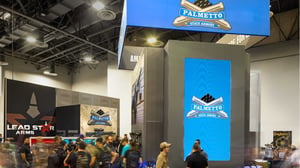
Key TakeawaysDefense trade show programs are more effective when each event has a clear purpose and the exhibit strategy accounts for changing audiences, products, partners, and logistical needs. By planning across the full event calendar, defense exhibitors can create a flexible program that makes better use of their assets, demonstrations, and budget.
|
A defense exhibit program has a lot of moving parts. You may be presenting equipment that is difficult to transport, explaining technology that needs more than a product display, or coordinating with partners whose demonstrations include your capabilities. Requirements can also change as a show approaches.
In my work with defense exhibitors, these considerations often shape the program before we begin discussing the booth. Understanding the audience, planning across the event calendar, and allowing for changes all influence how well the exhibit supports the team on the floor.
Here are six ways to approach that planning with greater flexibility and a clearer sense of where to invest your time and budget.
1. Give Each Event a Specific Job
Defense events serve different communities. A ground-autonomy event may call for different products and conversations than a maritime conference or a missile-focused symposium. Even when some of the same organizations attend, their priorities may vary.
Before committing to a show, identify who you want to reach and what you need to accomplish. You might be introducing a capability, meeting integration partners, or giving technical buyers a closer look at an application. Those objectives should guide your decisions about product displays, demonstrations, and meeting space.
Consider each event’s role in the full calendar, too. Where do you need a larger presence? Where would a smaller, focused exhibit support the conversations you want to have? Making those decisions together gives you a basis for allocating the budget across the year.
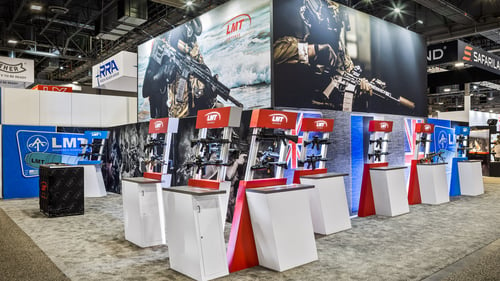
2. Coordinate Your Presence Across the Show Floor
Your technology may appear in several places at the same event. A partner could display your equipment, demonstrate your software, or incorporate your capabilities into a larger system. Each appearance gives attendees another way to understand what your company contributes.
That visibility takes coordination. Start by confirming what will appear in each location and who is responsible for transportation, installation, and on-site support. Agree on how the companies will be identified and what each booth team needs to know.
The messaging deserves as much attention as the logistics. Someone who encounters your product in a partner’s booth should understand its role and know where to go for more information. Your own team should also be familiar with related demonstrations elsewhere on the floor, so they can make useful introductions and direct visitors to relevant applications.
Include those partner locations in your show plan. They may support conversations that would be difficult to create within your own footprint.
3. Design Around the Full Program
Defense exhibitors often want to refresh their presence from one event to the next while continuing to use the assets they already own. A modular exhibit can support that goal, with components that can be reconfigured for different footprints, product displays, and meeting needs.
One show may require room for equipment and demonstrations. Another may need a smaller product presentation with space for meetings.
Review those needs before approving the initial design and ask how the components will work in each configuration.
A hybrid approach that combines owned and rented assets adds flexibility and can make the investment more efficient across the program.
You can own the core elements you use regularly and rent supplemental components when an event calls for a larger footprint, more meeting space, or a different presentation. That gives you room to adapt without purchasing and storing everything you might need for an occasional use.
Consider the details that will change most frequently. Can graphics be updated without replacing an entire wall? Can a product display be removed without leaving an awkward gap? Is there room to add a demonstration or accommodate another partner?
Evaluate costs across the calendar as well. Include freight, material handling, installation, storage, and rental elements. Check for overlapping dates that could require duplicate assets. Looking at those requirements together can help you decide what makes sense to own and where renting offers more flexibility.
4. Choose an Exhibit Partner Who Can Adapt with You
I have worked on projects where requirements changed only days before a show opened. A product announcement may move; a partner may join the exhibit, or a customer may request a different demonstration. Your team needs to understand the options and make decisions quickly.
You work hard to respond when an important customer’s needs change. Your exhibit partner should bring that same responsiveness to your program.
Discuss that expectation when selecting a partner. Ask who you will contact when something changes, how requests are evaluated, and how the design, production, and service teams coordinate a response. A partner who understands your products, priorities, and existing assets will be better prepared to work through the options with you.
Responsiveness also requires clear communication about feasibility. Updating a video has different implications than adding a heavy product display or revising a layout that affects electrical service and installation. You need timely answers about what can be done, what it will cost, and how it will affect the rest of the plan.
Your team has a role in that preparation, too. Keep drawings, asset inventories, and approved content organized and accessible. Establish who can approve changes. With current information and clear responsibilities, you and your exhibit partner can spend more time resolving the request and less time tracking down details.
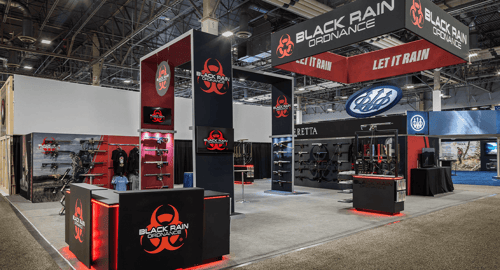
5. Build Demonstrations Around What Buyers Need to Understand
Full-size equipment may be difficult to bring to an event. Even when it is on display, visitors may need help understanding what happens inside it or how it works with other systems.
Scaled models, 3D-printed representations, animations, and interactive displays offer ways to explain those details. The choice depends on the question you need to answer. A physical model can show configuration and scale. An animation can explain a sequence of operations.
An interactive display can let a visitor examine individual components.
Begin with the conversation you want the demonstration to support. What should someone understand after a brief introduction? What additional information will a technical buyer want? How will your staff move from the demonstration into a discussion about the visitor’s application?
Give attendees room to explore at different levels. Some will need an overview, while others will arrive with specific questions. Your content and booth team should be prepared for both.
6. Adapt to New Industries While Keeping Your Brand Consistent
Companies with defense applications may also see opportunities in construction, mining, and the technology industry. An exhibit program can support that expansion, but the presentation needs to reflect the audience.
Review what should carry across events and what needs to change. Your visual identity and core positioning should remain recognizable.
Application examples, terminology, product emphasis, and demonstrations should address the needs of each industry.
Ask what the new audience already understands about your technology. Which capabilities are relevant to their work? What requires explanation? A presentation developed for defense buyers may assume background knowledge that attendees at a construction, mining, or technology event do not share.
Planning for those differences early can help you reuse exhibit components while adapting the story. It also gives your team time to develop the content and demonstrations needed for a different conversation.
Bring the Program Together Before the Design Begins
For your next planning discussion, gather the event calendar, audience priorities, partner commitments, available assets, and expected product updates. Identify the decisions that are settled and the areas where requirements may change.
Use that information to establish what each show needs to accomplish. From there, your team can make more informed choices about the footprint, product presentation, logistics, and budget, with a shared understanding of how each event contributes to the program.
Last reviewed: November 9, 2026
Brian Lanning reviewed this article for factual accuracy, technical completeness, and alignment with current industry practices. With over 25 years in tradeshow marketing, Brian specializes in guiding clients through complex exhibit programs from concept to completion.
Contact us today for a free consultation!